
CodeCraft Studios logo
CodeCraft Studios
Back to blogs
Business SystemsJuly 20265 min read

7 Signs Your Business Has Outgrown Excel Spreadsheets

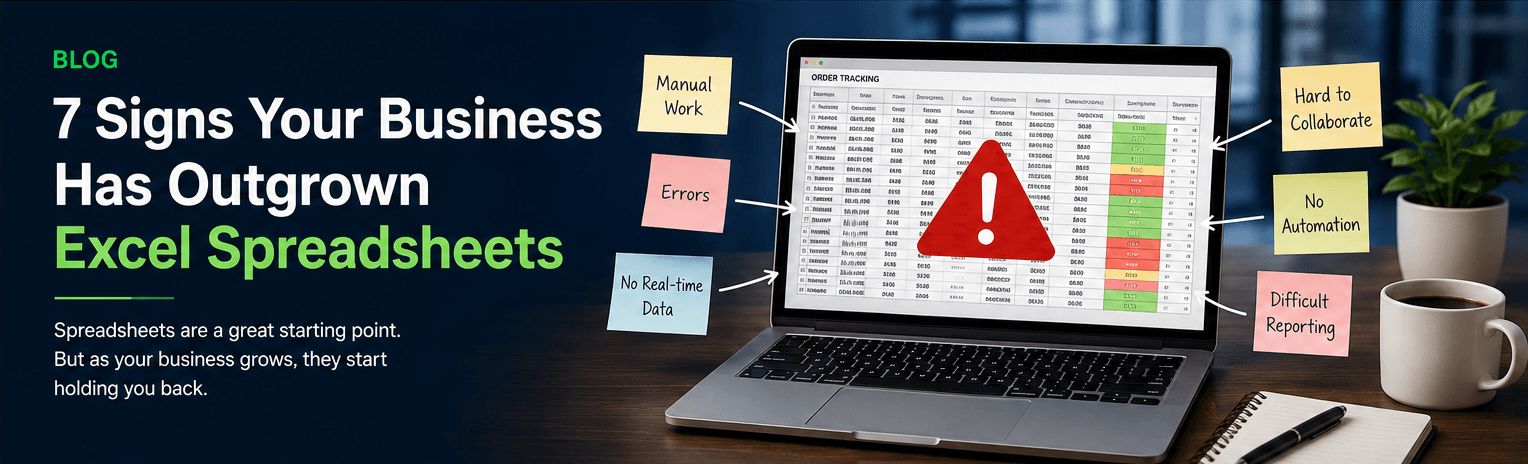
7 Signs Your Business Has Outgrown Excel Spreadsheets hero image

Manual work starts taking too much time

One of the clearest signs a business has outgrown Excel spreadsheets is when the team spends too much time maintaining files instead of moving the business forward. Copying data, updating formulas, and searching through sheets may feel manageable at first, but it becomes expensive as operations grow.

Manual work also increases the chance of delay and inconsistency. A better system reduces repeated admin effort so the team can focus on decisions, customers, and growth.

Errors and collaboration issues become harder to control

As spreadsheet use expands, small mistakes can create bigger business problems. A wrong formula, accidental deletion, or outdated version can affect reporting, inventory, or financial visibility.

Collaboration becomes harder too. When multiple people need access, different versions, overwritten changes, and missing updates quickly create confusion. This is usually the point where centralized business software starts making more sense.

Reporting and scattered data slow down decision-making

If monthly reports, inventory summaries, or order tracking require too much manual work, your tools are probably limiting the business. Reporting should help decisions happen faster, not create extra administrative burden.

Scattered data is another warning sign. When customer records, sales, operations, and stock live in separate files, accurate information becomes harder to trust. Centralized data management solves that by keeping important business information connected in one place.

Growing businesses usually need automation and scalability

What works for a small operation often breaks down as more customers, employees, products, or locations are added. Spreadsheets are flexible, but they are not built to support long-term operational complexity.

Custom software or workflow automation becomes valuable when the business needs repeatable processes, role-based access, real-time reporting, and room to grow without rebuilding the entire way the team works.

The right software should adapt to your business

Replacing spreadsheets does not always mean buying a large enterprise platform. For many businesses, the better next step is a system designed around their real workflow, with automation, stronger collaboration, and more accurate reporting built in.

The goal is not to force the business into another generic tool. It is to create a smarter system that saves time, reduces errors, and supports more confident growth.